

India has emerged as one of the fastest-growing user markets for GenAI tools, driven by ChatGPT
Awareness to achieve digital and GenAI maturity is need of hour, says D4NP founder Abhinav Chetan
Abhinav Chetan Founder, D4NP
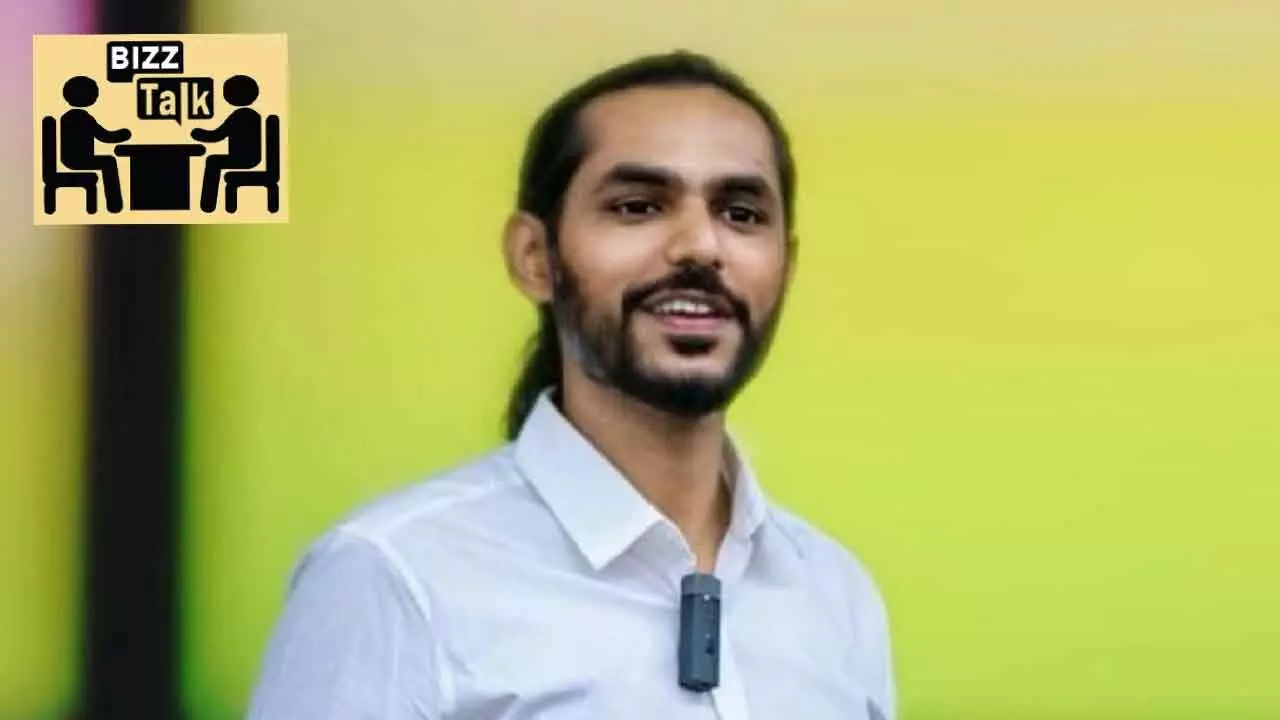
After gaining over 12 years of experience at Google, including eight years with Google for Nonprofits, Abhinav Chetan saw a recurring challenge across organisations: While access to powerful digital tools was growing, most teams struggled to turn adoption into meaningful outcomes. This gap between technology and capability became the foundation of his entrepreneurial journey.
Abhinav went on to build Digital For Nonprofits (D4NP), supporting over 100 impact organisations in developing digital maturity, and later launched Digicated.ai, which embeds Generative AI into marketing and operational workflows for brands. His work spans digital strategy, performance marketing, and AI-driven automation, helping organisations move from fragmented activity to scalable leverage.
Abhinav’s approach focuses on awareness, capability building, and aligning GenAI adoption with organisational goals. Today, Digicated.ai works with brands across media, gaming, ecommerce, education, and manufacturing, while D4NP continues enabling nonprofits to become GenAI fluent allowing teams to spend more time on high-impact work. Looking ahead, Abhinav believes GenAI will fundamentally reshape how Indian organisations operate.
“GenAI allows teams to do more with less by removing repetitive work and unlocking higher-value outcomes. My goal is to build GenAI maturity across organisations so technology becomes a true growth multiplier, creating both economic and social impact,” he told Bizz Buzz in an exclusive interview
With the growing thrust on digital transformation, e-governance, data centers, and GCCs, how do you see the landscape evolving in the Telugu states of Andhra Pradesh and Telangana?
Telangana and Andhra Pradesh have traditionally always been ahead of the tech curve, and they are now entering a more execution-led phase of digital transformation. It’s evident from the numbers that Hyderabad now accounts for nearly 40 percent of new GCCs set up in India, reinforcing its role as a technology and AI services hub.
At the same time, AP is set to generate 8.5 lakh jobs after signing several investment-related MoUs with companies like Google and TCS.
The real opportunity lies in pairing this infrastructure with capability, so digital access translates into productivity, inclusion, and long-term economic value. From our on-ground experience, building awareness, upskilling teams, and growing maturity can create a lot of impact for the entire ecosystem.
After 12 years at Google, what key gap did you identify that led you to build D4NP and Digicated.ai?
Over time, what became clear to me was that most organisations were unaware of the kind of digital and Generative AI (GenAI) leverage they could access. In many cases, they had tech tools within reach, but the understanding of what they could do with them was missing.
In addition, there was a widespread tendency to confuse adoption with maturity. I often explain this using a simple analogy. Many of today’s tech tools are built like fighter jets, but the people adopting them still only know how to drive motorbikes. Beyond adoption, there is a wide gap in skill, confidence and ability to use these technologies.
This problem is not limited to nonprofits or small organisations. It is equally prevalent across brands outside the top brands in the country. Most brands are neither fully aware of what these technologies can do, nor are they equipped to use them meaningfully.
Once organisations recognise these gaps, the path forward becomes clearer. Awareness comes first, followed by capability building. With this in place, acceleration towards digital and GenAI maturity becomes possible. I have seen this repeatedly in practice.
From my first hand experience, whether it is large nonprofit organisations like SEWA Bharat or established startups like University Living, both have benefited by embracing digital and GenAI maturity. The path is clear, when GenAI and digital maturity is aligned with organisational goals, the upside is significant.
Why do you believe digital infrastructure remains one of the most underfunded areas in the nonprofit sector?
Let’s examine this from both a funder and nonprofit’s point of view. From a funder’s perspective, grant decisions are typically made at the intersection of their focus areas and a nonprofit’s ambit.
As a result, conversations gravitate towards initiatives and outcomes that serve beneficiaries who are aligned with the funder’s cause e.g. a tech company sponsoring girl child education. A funder wants to see the maximum percentage of their grant get directed to beneficiaries. That is where alignment is easiest to establish.
From the nonprofit’s side, programmes are designed to address the needs of their recipients and are built with the beneficiary at the centre. While both funders and nonprofits allocate some resources to supporting functions such as hiring and operations, digital infrastructure is mostly an afterthought.
As a result, digitization is almost always treated as a ‘nice-to-have’ rather than a must-have. It becomes a secondary or even tertiary consideration and we saw that after analyzing 100 + nonprofits in the State of Nonprofits Digitization report.
Finally, many nonprofit leaders themselves are not digitally or AI savvy. If the value of digital is not clearly understood at the leadership level, it is unlikely to be treated as mission-critical, regardless of its long-term impact. These are some of the key reasons why digitization remains underfunded.
From your experience working with over 100 nonprofits, what are the biggest digital maturity challenges they face today?
The most significant challenge is a lack of awareness. This is particularly ironic because many advanced technology tools are now available to nonprofits at little to no cost. On the other hand, for-profits would typically spend a tidy sum to access the very same technologies.
The second challenge is a skilling gap that starts at the leadership level and percolates down through teams. Teams and individuals lack the understanding and skill-set required to use digital marketing and GenAI effectively.
Nonprofits also need to recognize that the path to digital maturity is a marathon, not a sprint.
They show remarkable persistence and patience when working towards their core mission, but often give up too early when it comes to digitization.
Without sustained effort and continuity, digital initiatives struggle to move beyond experimentation to deliver meaningful leverage. In summary, awareness, skilling and a mindset shift are the biggest digital maturity challenges nonprofits face today.
How can Generative AI realistically transform fundraising, operations, and scalability for nonprofits in India?
GenAI has become a powerful tool to create multi-modal content across text, image, audio and video. It can also conduct deep research across subjects, analyse complex datasets, and even code websites and applications.
This opens up possibilities for nonprofits which were previously unthought of. For example, in fundraising, GenAI can help nonprofits run automated newsletters and support personalized donor communication to improve retention through consistent engagement.
These activities traditionally required significant time and specialised resources, but can now be executed far more efficiently.
Operationally, nonprofits spend a disproportionate amount of time on conducting research and writing reports to showcase their research findings. GenAI can do both these functions in a fraction of the time teams previously needed.
The larger shift happens when every team member becomes GenAI fluent and starts utilising it for their day-to-day tasks. Then, people can focus on what truly matters - serving their beneficiaries.
What core problem does Digicated.ai solve for brands operating high-volume digital marketing functions?
The core premise at Digicated.ai is to enable exponential leverage by embedding GenAI directly into teams and their workflows. The volume of functions is no longer a barrier because GenAI learns quickly and adapts at scale.
This means that teams can operate with greater speed and consistency, allowing marketing functions to scale without a proportional increase in effort.
In high-volume digital marketing environments, the opportunity lies in accelerating the entire marketing lifecycle, be it research, insight generation, campaign creation, creative production, measurement, or optimising existing campaigns.
This applies across both paid and organic channels. For example, in organic marketing, aspects like content creation, SEO and newsletters can be automated to a great degree.
In paid marketing, aspects like persona mapping, creative production and analysing campaign performance can also be done by GenAI. Whether it is crafting optimized search ads, designing creatives, or producing short-form video, these tasks can now be executed far more efficiently using GenAI.
Through Digicated.ai, we assess a brand’s current GenAI maturity, align it with organizational goals and then build capability that helps marketers do their job better. We’ve seen this play out across verticals ranging from media, gaming, ecommerce, education and even manufacturing.
As AI adoption accelerates, what should founders and business leaders keep in mind to avoid superficial or risky implementation?
Founders and business leaders need to keep pace with the rapid rate of change across GenAI tools and capabilities. Staying informed and educated about the latest GenAI developments is key to making effective decisions.
Next, upskilling your entire team is equally important. Start by identifying specific and repetitive use cases that can be automated using GenAI. Mapping these workflows demonstrates tangible value to teams and builds confidence in the technology. When people see AI solving real, everyday problems, adoption accelerates.
Finally, privacy and ethical use of GenAI is critical. One should never share sensitive data or confidential information with these platforms. Also being transparent and declaring AI use will go a long way in building consumer trust.
Looking ahead, how do you see India’s digital and GenAI ecosystem evolving over the next five years for both impact organisations and brands?
India is already on a strong digital growth trajectory. Over the last five years, smartphone penetration, internet access, per capita income, advertising expenditure, and GDP have all grown steadily. All indicators suggest these trends will continue.
India has also emerged as one of the fastest-growing user markets for GenAI tools. Platforms such as ChatGPT, Perplexity, and Gemini have seen strong adoption, with India being a key growth market.
Six out 10 Indian consumers are already using GenAI tools as per a BCG report which means we have moved from awareness to experimentation. As this progression continues, the baseline for digital capability will rise across the ecosystem.
GenAI will take over repetitive tasks, thus allowing organisations to focus more on higher-value work. This will improve efficiency, reduce overheads, and allow both brands and nonprofits to deploy resources more strategically.
In the longer term, GenAI represents a significant economic opportunity, both from a domestic and international perspective. With organisations being able to do more with less, profitability will rise. Alongside this, a GenAI capable workforce can cater to global demand and create an AI-service export opportunity.





